
Oxymetholone (Anadrol): Uses, Effects, Side Effects & Safety Explained
What Is Oxymetholone?
Oxymetholone is a synthetic anabolic-androgenic steroid (AAS) historically associated with the brand name Anadrol.
It was developed for medical purposes and has been used in the treatment of certain types of anemia involving inadequate red-blood-cell production.
Outside medicine, oxy has also become widely known in bodybuilding and strength-training communities. These nonmedical applications should not be confused with clinically supervised treatment.
As a potent anabolic-androgenic steroid, oxy can produce significant effects throughout the body and is associated with potentially serious adverse effects.
What Is Anadrol?
Anadrol is a brand name historically associated with oxymetholone.
This distinction is important:
Oxymetholone = active pharmaceutical ingredient
Anadrol = brand/trade name
The term “Anadrol” is nevertheless frequently used informally when discussing oxymetholone in general.
Readers may therefore encounter terms such as Anadrol-50, Anadrol-50mg, oxy tablets, oxymetholone-50mg and oral Anadrol when researching the compound.
Is Anadrol an Anabolic Steroid?
Yes.
Oxymetholon belongs to the anabolic-androgenic steroid class.
Anabolic-androgenic steroids are synthetic substances related to testosterone. Their biological effects are not restricted to skeletal muscle.
They can influence hormonal, cardiovascular, metabolic, reproductive and other physiological systems.
This is why assessing an anabolic steroid only according to visible changes in muscle mass or physical performance provides an incomplete picture of its effects.
Why Was Oxymetholone Developed?
Oxym has a history of legitimate medical use.
One of its principal historical applications has involved the treatment of certain anemias.
Its ability to influence red-blood-cell production contributed to its therapeutic use.
Medical applications of oxy-metholone should be distinguished from its use for physique or athletic-performance purposes.
A medication having an established therapeutic application does not mean that unsupervised use is safe.
How Does Oxy-metholone Work?
Like other anabolic-androgenic steroids, oxymetholone interacts with biological pathways associated with androgen activity.
Anabolic steroids can affect protein metabolism and other processes involved in tissue development.
Oxymetholone can also influence erythropoiesis—the process through which the body produces red blood cells.
These systemic effects help explain both its historical therapeutic applications and the importance of medical monitoring.
What Does “Anadrol 50” Mean?
People researching oxymetholone frequently encounter the terms 50 mg Anadro and Anadrol 50mg.
The number generally refers to a formulation labeled as containing 50 milligrams of oxymetholone per dosage unit.
It should not be interpreted as a recommendation regarding how much an individual should take.
Appropriate prescribing depends on the medical indication, individual patient factors, contraindications, concurrent medications and clinical monitoring.
Why Is Anadrol Discussed in Bodybuilding?
Oxymetholone is frequently discussed in bodybuilding communities because anabolic-androgenic steroids can affect muscle tissue, bodyweight and physical performance.
You may therefore see online terminology connecting Anadrol with:
- bodybuilding
- muscle mass
- bulking
- strength
- anabolic steroid cycles
- steroid stacks
These are descriptions of nonmedical practices rather than established therapeutic indications.
Online popularity also does not establish safety.
What Are the Potential Side Effects of Oxymetholon?
Oxymetholone can cause significant adverse effects.
Potential concerns include effects involving:
- Liver function
- Cholesterol and blood lipids
- Cardiovascular health
- Blood pressure
- Fluid retention
- Hormonal function
- Reproductive function
- Skin and hair
- Mood and behavior
The severity and likelihood of adverse effects can vary between individuals.
Pre-existing health conditions, concurrent medications and other substances can further alter risk.
Oxy-metholone and Liver Health
Liver toxicity is an especially important consideration with oxymetholone.
Certain orally active anabolic steroids have chemical characteristics that allow them to survive oral administration but can also contribute to hepatic stress.
Potential hepatic complications associated with anabolic steroids of this type can be clinically significant.
Importantly, liver abnormalities do not necessarily produce obvious symptoms during their early stages.
The absence of noticeable symptoms should therefore not be interpreted as evidence that liver function is unaffected.
Oxy-metholone and Cholesterol
Anabolic-androgenic steroids can adversely affect blood lipid profiles.
This may involve changes in:
HDL cholesterol — commonly referred to as “good” cholesterol.
LDL cholesterol — commonly referred to as “bad” cholesterol.
Unfavorable changes in these markers are relevant because cardiovascular risk develops through multiple interacting factors.
For more information, see our guide to Anabolic Steroids and Cholesterol.
Oxy-metholone and Cardiovascular Health
Cardiovascular health is another important consideration when researching anabolic-androgenic steroids.
Potential concerns associated with this drug class include changes involving blood pressure, cholesterol, fluid balance and cardiovascular function.
Risk cannot be determined solely from how healthy or physically fit someone appears.
Individuals with underlying cardiovascular conditions may face additional concerns.
Water Retention and Oxymetholone
Fluid retention is another effect associated with oxy-metholone.
Changes in fluid balance can affect bodyweight and may also have implications for blood pressure and cardiovascular health.
Rapid increases on a scale therefore should not automatically be interpreted as equivalent increases in newly developed skeletal muscle.
Hormonal Effects
External anabolic-androgenic steroids can interfere with the body’s normal hormonal feedback mechanisms.
The endocrine system carefully regulates hormone production.
Introducing external androgenic substances can alter that regulation and affect endogenous hormone production.
These effects may persist after the external compound is discontinued.
Oxymetholone and Women
Anabolic-androgenic steroids can cause androgenic effects in women.
Potential effects can include changes associated with virilization, some of which may become difficult or impossible to reverse.
Medical use therefore requires careful consideration of individual circumstances, contraindications and potential risks.
Does Oxymetholone Interact With Other Drugs?
Drug interactions are an important consideration with prescription medications, including anabolic-androgenic steroids.
Interactions may affect either the effectiveness or safety of one or more medications.
People prescribed oxy-metholone should therefore ensure that their healthcare professional knows about other prescription medicines, over-the-counter medications and relevant substances they use.
Is Oxy-metholone the Same as Testosterone?
No.
Oxymetholone and testosterone both belong to the broader androgen/anabolic-steroid family, but they are different compounds with different pharmacological characteristics.
Testosterone is a naturally occurring hormone that is also available in pharmaceutical formulations.
Oxymetholone is a synthetic anabolic-androgenic steroid.
Anadrol vs Oxymetholone: Is There a Difference?
When discussing the active drug, Anadrol and oxy-metholone generally refer to the same active ingredient.
However, Anadrol is a brand name, whereas oxy-metholone is the generic drug name.
This distinction becomes especially important when evaluating products advertised online.
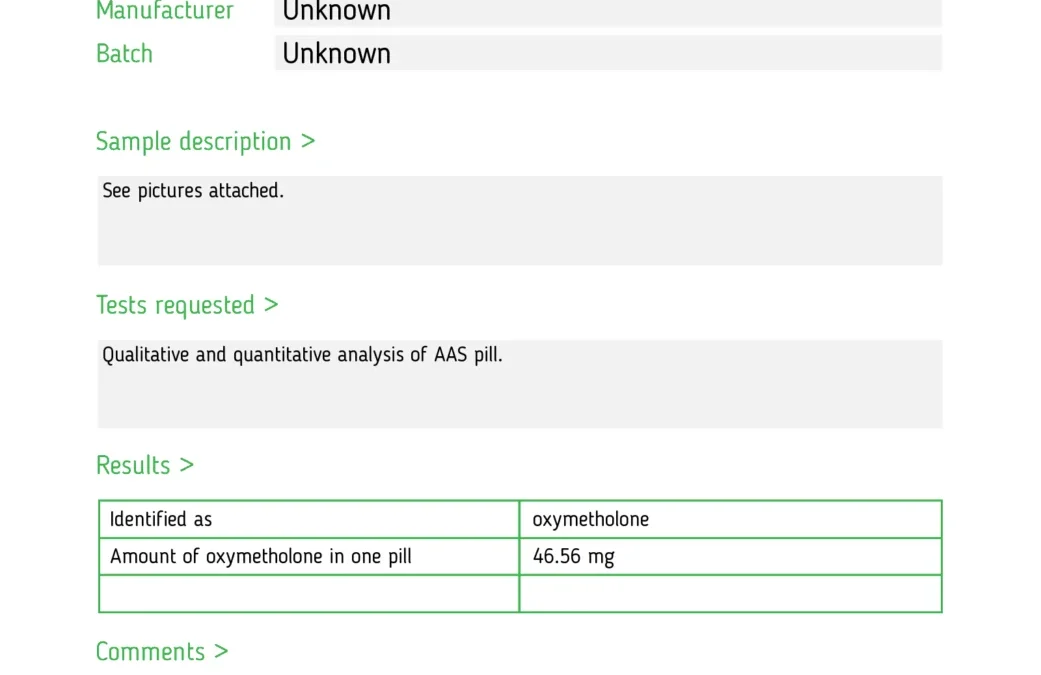
A package displaying the word “Anadrol” does not independently prove what ingredients it contains.
Counterfeit Oxy-metholone Products
Counterfeit and incorrectly labeled pharmaceutical products present additional risks.
A product can have professional-looking packaging while containing:
- An incorrect active ingredient
- An incorrect concentration
- Undisclosed ingredients
- Contaminants
- No active ingredient at all
Appearance alone therefore cannot establish pharmaceutical authenticity.
Where a manufacturer provides an authentication mechanism, it can provide additional information about whether packaging corresponds with the manufacturer’s records.
Read our Proper Labs Product Authentication & Check Codes Guide for more information about product verification.
Is Oxymetholone Legal in the UK?
Anabolic steroids are subject to UK drug legislation.
Legal rules can distinguish between possession, supply, manufacture and importation, and circumstances matter.
Because legislation and regulatory guidance can change, readers should consult current official UK government information rather than relying solely on bodybuilding forums or social-media posts.
Is Anadrol Safe?
It would be misleading to describe oxy-metholone as inherently “safe.”
It is a pharmacologically active anabolic-androgenic steroid capable of producing significant adverse effects.
Medical professionals evaluate whether the potential therapeutic benefit justifies those risks for an individual patient.
That risk-benefit assessment is fundamentally different from unsupervised nonmedical use.
Frequently Asked Questions About Oxymetholone
What is oxymetholone?
Oxymetholon is a synthetic anabolic-androgenic steroid with a history of medical use, including treatment of certain types of anemia.
What is Anadrol?
Anadrol is a trade name historically associated with oxymetholon.
Is Anadrol an oral steroid?
Oxymetholone has been formulated as an orally administered anabolic-androgenic steroid.
What does Anadrol 50mg mean?
It generally refers to a formulation labeled as containing 50 mg of oxymetholone per dosage unit. The designation is not a recommendation for individual use.
Is Anadrol the same as oxymetholone?
Oxymetholone is the generic active ingredient, while Anadrol is a brand name associated with it.
Can oxymetholone affect the liver?
Yes. Hepatic effects are an important safety consideration associated with oxymetholone.
Can oxymetholone affect cholesterol?
Anabolic-androgenic steroids can produce unfavorable changes in blood lipids, although effects vary according to the compound and individual circumstances.
Is oxy a testosterone?
No. Oxy-metholone is a synthetic anabolic-androgenic steroid and is chemically distinct from testosterone.
Is oxy used in bodybuilding?
Anadrol is discussed and used nonmedically within some bodybuilding communities. Such use should not be confused with medically indicated treatment and can involve serious health risks.
Are products labeled Anadrol always genuine?
No. Packaging and labeling alone cannot establish the identity, concentration, purity or authenticity of a pharmaceutical product.
Final Thoughts
Oxymetholon (Anadrol) is one of the most widely recognized oral anabolic-androgenic steroids.
Understanding it requires more than examining its reputation within bodybuilding.
Its medical history, pharmacology, potential liver effects, cardiovascular considerations, hormonal effects and other adverse reactions are all important parts of the picture.
Anyone researching oxy-metholon should distinguish evidence-based medical information from promotional claims and recognize that nonmedical anabolic-steroid use can carry substantial health risks.